Approved for your zone
In Miami-Dade and Broward, the High Velocity Hurricane Zone, the panel, clips and fastening pattern must match a Miami-Dade NOA or a Florida Product Approval with HVHZ approval. The approval document dictates the installation.
South Florida · Roofing systems
Standing seam and metal tile roofing for South Florida homes: how it performs, what it costs you in upkeep, and what to check before you choose it.
Talk through your roof ↗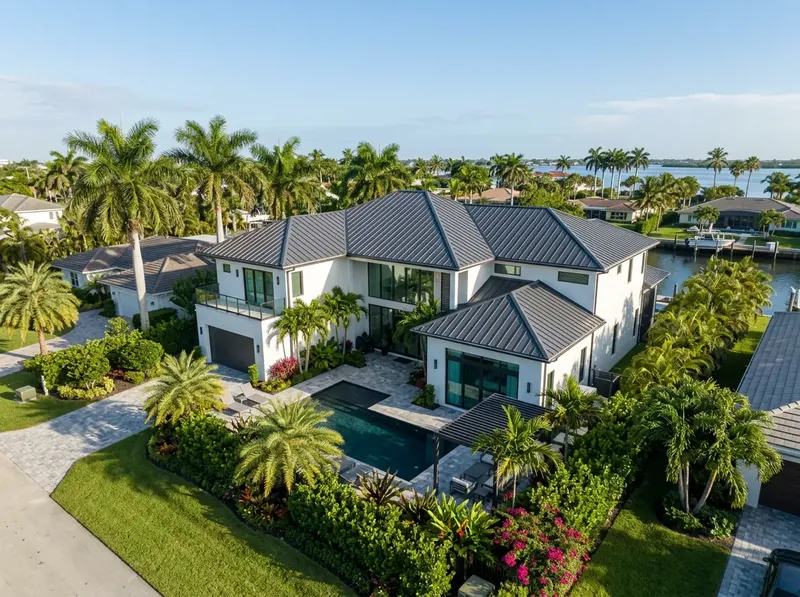
At a glance
Metal roofing uses interlocking panels or shaped metal tiles fastened over a sealed roof deck. Homeowners often choose it for its clean look, its resistance to sun and moisture, and how well a properly approved system holds up to high winds.
In South Florida
In Miami-Dade and Broward, the High Velocity Hurricane Zone, the panel, clips and fastening pattern must match a Miami-Dade NOA or a Florida Product Approval with HVHZ approval. The approval document dictates the installation.
Near the coast, ask whether the panel metal, coating and fasteners are suited to salt exposure and how coastal distance affects the manufacturer warranty.
Roof deck attachment and the secondary water barrier are recorded on the OIR-B1-1802 wind mitigation form. Some homeowners may qualify for insurance premium credits; savings vary by carrier and home.
Colors & finishes
Metal roofs come in a wide range of factory-applied colors and finishes. Lighter colors reflect more heat. Confirm that your chosen color and profile are covered by the product approval and allowed by any community association.
Service life depends on the specific product, installation, ventilation and exposure. Ask for written manufacturer and workmanship warranty terms.
You do not need every answer to get started. A few photos and your priorities are a useful beginning.
Create your project brief ↗Start with an assessment of the roof and any visible concerns. Ask for documented findings, a description of the proposed work and an explanation of what a repair would and would not address. The recommendation should reflect the condition of your roof rather than a diagnosis based on age alone.
Explore metal, tile, shingle, flat and TPO roofing on our roofing-systems pages. Roof shape, slope, structure, drainage, appearance and project requirements help determine which systems are suitable for your building.
Request the proposed roof assembly, removal and disposal scope, preparation and flashing details, permit coordination, cleanup, warranty terms and the process for concealed damage or other changes. Confirm which items are included before comparing totals.