Drainage first
Tapered insulation, drains and scuppers should move water off the roof quickly after afternoon storms. Ask how the design prevents ponding.
South Florida · Roofing systems
Flat and low-slope roofing for South Florida homes, additions, carports and patio roofs: membrane options, drainage and inspection priorities.
Talk through your roof ↗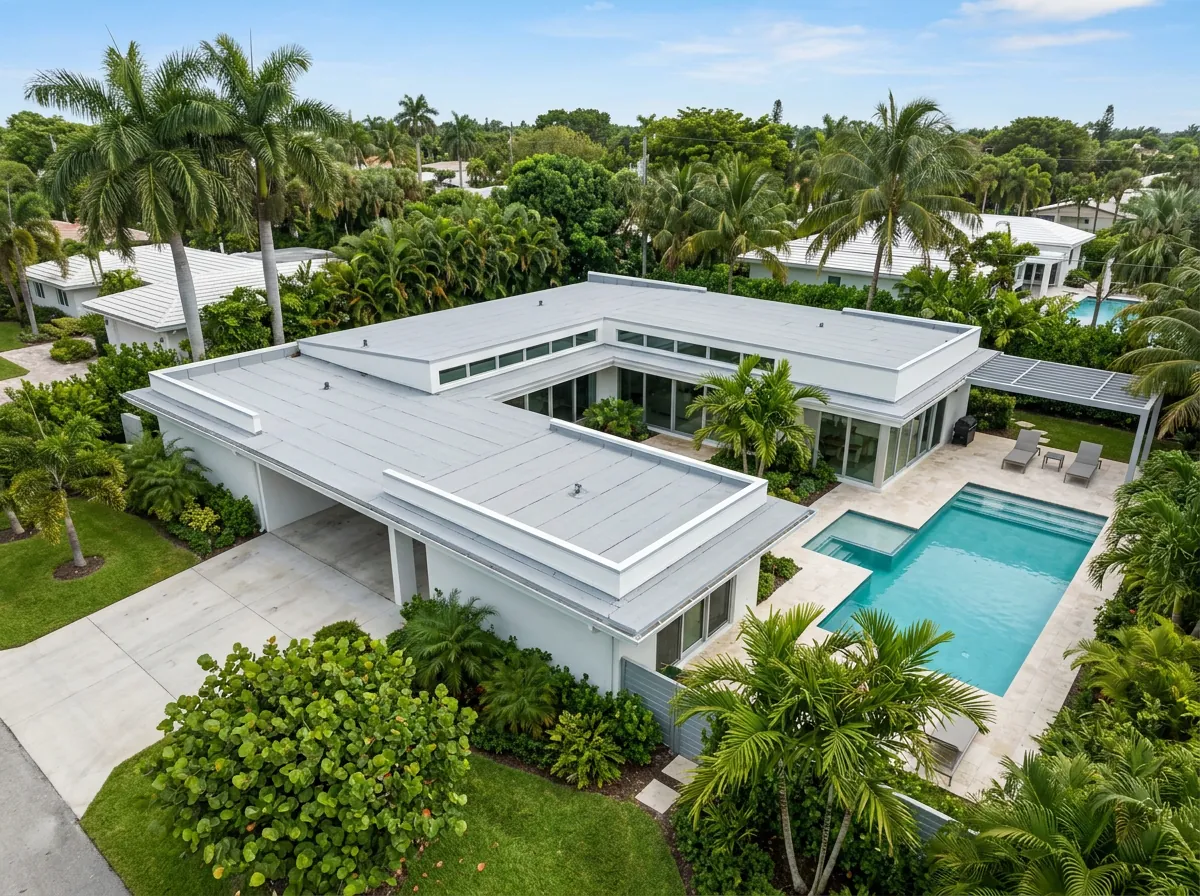
At a glance
Flat roofs are never perfectly flat. Low-slope roofs rely on a continuous waterproof membrane and careful drainage design. In South Florida, heavy summer rain and strong sun are the main forces a flat roof has to handle.
In South Florida
Tapered insulation, drains and scuppers should move water off the roof quickly after afternoon storms. Ask how the design prevents ponding.
Common low-slope systems include modified bitumen, built-up roofing and single-ply membranes such as TPO. Each must carry the product approval required for your county.
Parapet walls, penetrations and equipment curbs need flashing that matches the approved system. These are where most flat-roof leaks begin.
Colors & finishes
Low-slope membranes are usually chosen for performance more than color. Reflective white or light-colored surfaces can reduce heat gain; results vary by building.
Service life depends on the specific product, installation, ventilation and exposure. Ask for written manufacturer and workmanship warranty terms.
You do not need every answer to get started. A few photos and your priorities are a useful beginning.
Create your project brief ↗Metal Roofing · Tile Roofing · Shingle Roofing · TPO Roofing
Start with an assessment of the roof and any visible concerns. Ask for documented findings, a description of the proposed work and an explanation of what a repair would and would not address. The recommendation should reflect the condition of your roof rather than a diagnosis based on age alone.
Explore metal, tile, shingle, flat and TPO roofing on our roofing-systems pages. Roof shape, slope, structure, drainage, appearance and project requirements help determine which systems are suitable for your building.
Request the proposed roof assembly, removal and disposal scope, preparation and flashing details, permit coordination, cleanup, warranty terms and the process for concealed damage or other changes. Confirm which items are included before comparing totals.