Power for selected loads
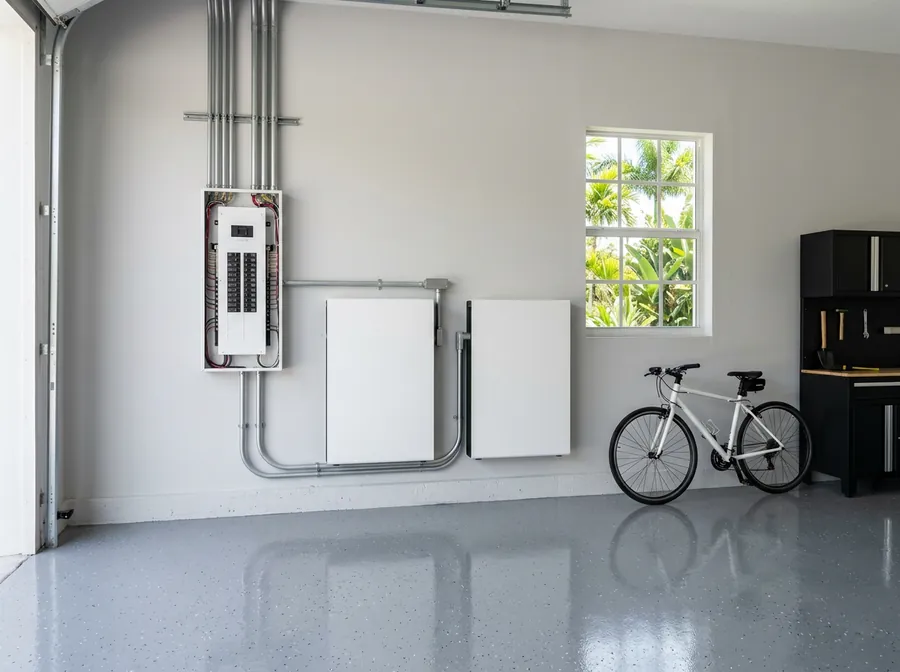
A well-defined backup panel keeps the circuits you choose available within the system’s limits.
South Florida · Stored energy · Prioritized for your home
Backup begins with what matters most.
Plan battery backup around critical circuits, desired runtime and the equipment already serving your home.
Start with the property
A battery is most useful when its job is specific. Start with the loads you want to support—refrigeration, lights, internet, selected outlets, medical equipment or larger appliances—then look at their starting and running power, expected duration and how the system will recharge.
Why homeowners explore it
A well-defined backup panel keeps the circuits you choose available within the system’s limits.
Batteries operate without on-site fuel or the engine noise of a conventional standby generator.
Compatible solar can recharge the battery during extended outages when the system is designed for that operation.
A clear route forward
List what must run, what would be helpful and what can remain off during an outage.
Compare instantaneous power, stored energy, runtime goals, recharge strategy and equipment compatibility.
Coordinate location, permits, electrical work, commissioning, monitoring and a homeowner walkthrough.
Details that shape the result
Good decisions live in the specifics. These are the conversations that turn a broad idea into a useful scope.
Power determines what can run at once; stored energy influences how long those loads can run.
Separating essential circuits can make stored energy last longer than attempting whole-home backup.
Clearances, temperature, weather exposure, flood risk and access influence where batteries can go.
Solar, grid availability and household use determine how the battery recovers after discharge.
Straight answers
Runtime depends on usable storage, battery charge and the loads operating. A proposal should model specific circuits and usage assumptions.
Some systems can support larger loads when sized and configured for them. Starting power and energy use must be evaluated.
A battery can be charged from the grid, but compatible solar may provide a way to recharge during an extended outage when the system is designed for backup operation.
Make the first conversation useful
Keep exploring